I'm thinking about New Year's Eve plans tonight and I can't let the opportunity to tell you about one of the best things I ever did for myself pass by. It changed my life, and I hope it'll change yours too!
Back in college my best friend and I made a pact to abolish New Year's Resolutions. It started out more a joke than anything, as we talked about all our failed resolutions (especially the dreaded "lose some weight" or "exercise regularly"). We talked about all the guilt and frustration that we inflicted upon ourselves, all for the sake of "starting out the New Year right". So we decided to ditch the masochistic practice of New Year's Resolutions - we would have New Year's REVOLUTIONS instead!
The idea is simple. Instead of dwelling on your vices and bad habits, telling yourself you'll change when you know you won't, put your energy towards the positive things in your life! Don't look at the bad, look at all that good in you that doesn't get the kudos you deserve! My first New Year's Revolutions list looked something like this:
1. Cultivate creativity 2. Be as generous with love for myself as others 3. Laugh out loud as much as I can 4. Visit more dive bars to meet really interesting people (remember this list was made in college...) 5. Relax and let things happen.
What a phenomenal year it turned out to be! When I looked back at my list I remembered taking more risks, being more honest and open, really enjoying parts of my personality that I am proud of! I didn't have the "wow, I really let myself down" feelings I had had for years and years before. I encourage you to look into what makes you happy and follow in your own footsteps to make 2009 an exceptional year.
If you need a little nudge, make the same New Year's Revolution pact with your best friend, sister, husband, neighbor, you name it. Just try to eliminate negative words like: No, Quit, Stop, or Diet and use happy words like: Enjoy, Rest, Giggle, or Indulge. Once you get the hang of it you'll wonder why you ever fretted over gym memberships.
Wednesday, December 31, 2008


Friday, November 14, 2008
Let it snow, let it snow, let it snow

I'm watching the first snow of the season fall, and as the yard and trees are getting dusted with pretty light white I'm thinking about the next weeks ahead. Soon it'll be Thanksgiving, then Christmas, then New Year's. I love this time of year. Being with my family for the big meals, staying in with my husband to watch old movies On Demand, getting to a lot of the projects indoors that I've been putting off for years.
Winter months always make me nostalgic. There's nothing better than putting on a vinyl record, making some tea, and doing an "arts & craft" project. Remember kindergarten when you'd have "arts & crafts"? Nothing better.
And in the cold months ahead, a great project you can do for birds and with your kids is the classic Pine Cone Bird feeder. If you haven't made one of these lately, treat yourself. It'll take you back to your six-year-old-self.
Start by collecting fallen pine cones (go to a pine forest and forage - or pickup the pine cones in your own yard if you have them - you could buy them prepackaged in stores but I think that's a waste of money and a waste of an opportunity to be outside!) It doesn't matter exactly what type of pine cones you start with, but I think cones that are open offer more "grip" and better nooks for birdseed.
Tie a length of string to the top of your pine cones (varying lengths to hang from a tree, porch, or pergola). If you use jute or hemp your feeders will look rustic, use narrow satin ribbon for a rich and decorative look (my fabric store sells 15 yards for only 50 cents per roll - in lots of pretty colors!) Next, break out some peanut butter (chunky or smooth) and push into the pine cone crevices. It doesn't need to be neat, I like the look of the pine cone tips coming through the seed, but the more peanut butter you use the more sticking surface you'll have.
Once your pine cone is coated roll it in a plate of birdseed. You can use any type of seed, millet is a classic but sunflower seeds make a pretty contrast too.
If you are worried about squirrels raiding your new Pine Cone Bird feeder, add a couple tablespoons of cayenne pepper to the birdseed before rolling your pine cones. Squirrels hate pepper and they should leave your feeder "For the Birds"!
Thursday, October 23, 2008
Time to come in from the cold
It's that time of year when first-freezes will do a number on your hummingbird feeders - so when weather is unpredictable and temperatures drop suddenly, it's time to put your feeders in winter storage.
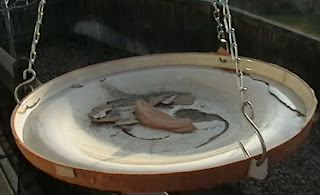
Glass and ceramic hummingbird feeders (and seed feeders for songbirds) need to be stored indoors or in your garage during freezing weather. Since hummingbird feeders are filled with liquid nectar, freezing temperatures will cause the nectar to expand and possibly crack or damage your feeders. Sometimes there are hairline cracks that can snap a glass piece in two when frozen nectar expands.
Any exposed terra cotta in your hummingbird and songbird feeders can absorb moisture which can also freeze and break your ceramic pieces. I learned the hard way last year when I kept a ceramic bird bath out in my yard all winter and had shards of ceramic on my porch after a big freeze. Whoops!

Even hummingbird feeders that are plastic are best stored for winter. The freezing nectar can warp plastic, and hard freezes can break plastic pieces. UV light weakens plastic, and remnant nectar can grow some nasty bacteria that adheres and corrodes plastic. You can actually ruin and destroy your plastic feeders by leaving old nectar in storage. If there's snow on the ground and ice on the drive you won't be seeing hummingbirds anyway. Best to just put your feeders away for next season!
It always helps your hummingbird plants if you winterize your garden - lay down some fresh mulch to add nutrients to the soil, and add compost materials to your beds. Throughout winter remember to water plants if you don't snow or rain for a couple weeks - plastic rain gauges near your plants are a great way to monitor the actual water your plants receive. In desperately dry climates you can add polymers to the soil that swell when water is plentiful and then slowly distribute the moisture into the soil. Lots of nurseries and gardening catalogs sell these and they are great to use in xeric gardens year-round!
Subscribe to:
Posts (Atom)

Hummingbird in Napa, CA